
Sex Offender Checks in Cass County
The Texas Public Sex Offender Registry is the main public channel for Cass County sex offender records. Texas DPS manages the database, while the local registering authority collects and verifies information. A person who lives inside a city generally reports to city law enforcement, such as the Atlanta Police Department or Linden Police Department. A person in a rural part of Cass County generally reports to the county authority. This split matters if a profile raises a question about an address or compliance.
Begin with the facts already known. A complete name helps, but aliases can cause a name-only search to miss a record. An address, city, ZIP code, county filter, or map area can reveal a listing that uses a different name form. Compare several profile fields before deciding two records concern the same person. Similar names are not enough. The registry is free and is distinct from a court docket, jail search, or statewide criminal-history name check.
The official DPS search screen offers both name and location paths, which makes it useful to pair a person search with a geographic check.
Cass County Registry Name and Map Checks
Name and map searches answer different questions. A name search works best when checking a known person and possible aliases. A county or city search is better for broad community awareness. An address and radius search focuses on one location. In Cass County, where homes and towns span a large rural area near Arkansas and Louisiana, a city name alone may be too narrow. Use the county filter, then inspect the map and list views together.
Geographic results should still be read with care. A pin is a display aid, not a survey or a promise that the person is present at that spot. Portal timeouts can also interrupt a search. Retry the official registry instead of treating a failed load or empty screen as proof that no listing exists. If an address appears stale, do not confront the listed person or household. Save the public profile details and report the concern to the proper city or county registering authority.
Note: A Cass County map result identifies a public registration location, not a finding of current conduct or immediate danger.
How to Search the Texas Public Sex Offender Registry
Texas DPS lets the public search the registry by identity or location. The portal may change labels, and exact radius choices were not available during the research capture, so use the choices shown on the live form. A practical Cass County sex offender check follows four steps:
- Open the DPS registry and review its conditions of use before submitting a search.
- Enter a first and last name, or choose a geographic path such as address, city, ZIP, or Cass County.
- Compare the list and map results. Check aliases and physical details before opening a likely match.
- Read the full public profile, including offense, address, status, and registration details, then confirm urgent facts with the registering authority.
The search controls support several routes. None should be treated as an identity match by itself.
| Field label | Type | Required | Use |
|---|---|---|---|
| First and last name | Text | One identity path | Try known aliases or alternate name forms. |
| Address or location | Text and map | No | Centers a geographic search near a known place. |
| City or ZIP | Text or selection | No | Narrows results within a town or postal area. |
| County | Dropdown | No | Select Cass for countywide registry results. |
| Radius | Dropdown | No | Sets the range for a location search; use live options. |
| List, map, search, clear | View and action | As needed | Changes the view, runs the query, or resets fields. |
Cass County Cross-State Registry Searches
Cass County borders Arkansas and lies close to Louisiana, so a Texas-only search may not answer a question that crosses state lines. The U.S. Department of Justice operates the National Sex Offender Public Website, or NSOPW. It sends a query across participating public state, territorial, and tribal registries. Use it when a person may have moved, works across a border, or has an address outside Texas.
NSOPW is a second layer, not a replacement for the Texas record. The Texas DPS profile remains the source for Texas-specific fields and registration status. Search both systems with the same name variations and compare the underlying jurisdiction. A missing national result can reflect a spelling difference, a participating system's availability, or a record that is not public under the source jurisdiction's law.
The national public registry interface provides the official cross-state search route.
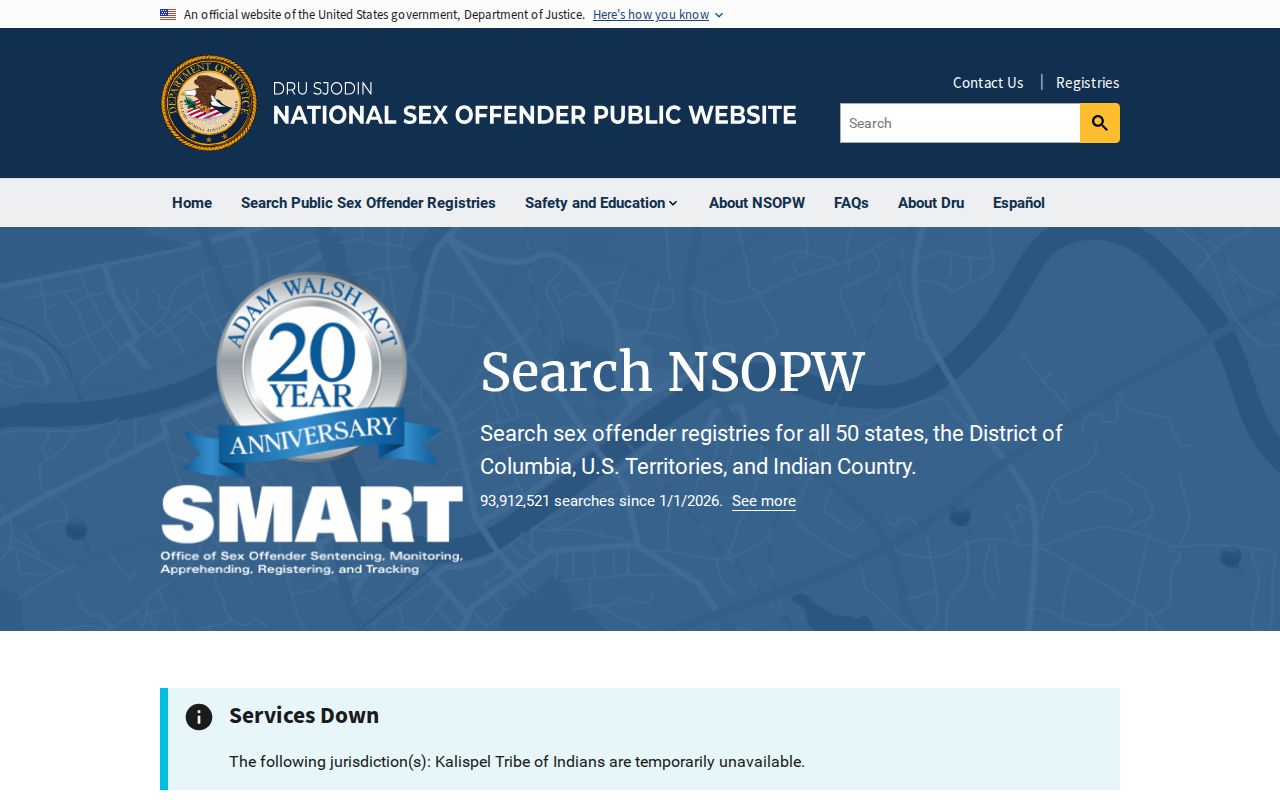
For a Cass County result, return to Texas DPS and the appropriate local registering authority for state and local confirmation.
Inside a Registry Profile
A public registry profile groups identity, location, offense, and status fields. Availability can vary by record. Texas law authorizes collection of more information than it allows DPS to display. A blank public field does not prove the information was never reported. It may be protected, unavailable, or not applicable to that registration event.
| Name and aliases | Public identity names that help distinguish a person and locate alternate entries. |
|---|---|
| Photo and description | Photo and physical traits such as sex, race, height, weight, eyes, hair, scars, marks, or tattoos when published. |
| Registered address | The public residence or location information supplied under Texas registration rules. |
| Offense and statute | The reportable offense, legal citation, conviction or adjudication date, sentence, and lawful victim category fields. |
| Risk information | Texas risk assessment information, which is not the same as a federal SORNA tier or duration rule. |
| Status and other fields | Registration status plus public vehicle, work, school, and physical-mark information when entered and releasable. |
Code of Criminal Procedure Article 62.005 keeps Social Security numbers, driver's-license numbers, phone numbers, online identifiers, victim identities, and certain juvenile or nonpublic facts from the public database. That boundary protects sensitive data while leaving the fields Texas law designates for public awareness.
Cass County Registry Verification Cycles
Texas uses recurring verification rather than a one-time filing. The baseline rule is annual verification within the period around the registrant's anniversary. A person with two or more reportable convictions or adjudications may have to verify every 90 days. The local registering authority checks the information required by law, while DPS maintains the statewide public view.
Risk language and verification frequency describe different things. A low, moderate, or high risk assessment relates to notification. It does not by itself set the ten-year or lifetime registration term. Likewise, a 90-day check-in schedule does not create a federal tier label. Read the profile, the precise reportable offense, and the Texas rule together. If a Cass County profile seems out of date, give the authority the name, listed address, and specific concern. Let trained staff check compliance.
Note: City residents generally verify with city law enforcement, while rural Cass County residents generally use the county registering authority.
Texas Registration Levels and Requirements
Texas duration turns on the exact reportable offense or adjudication and the dates used by Chapter 62. It cannot be read from a map color alone. Article 62.101 separates lifetime duties from other adult and juvenile terms. Release and supervision dates may affect when a ten-year period begins. Relief rules can also matter in a juvenile case.
| Texas category | Duration or meaning | Public reading caution |
|---|---|---|
| Article 62.101(a) enumerated offenses | Lifetime registration | Confirm the exact offense and statutory basis. |
| Other reportable adult event, Article 62.101(b) | Generally ten years after release or supervision discharge, using the later date | The dates on a profile may require source confirmation. |
| Juvenile adjudication, Article 62.101(c) | Generally ten years, subject to juvenile relief rules | Some juvenile fields and proceedings are not public. |
| Low, moderate, or high risk | Notification assessment | Not a federal tier and not a substitute for the Texas duration rule. |
The official Chapter 62 text is the source for Texas registration, verification, publication, and notification duties.
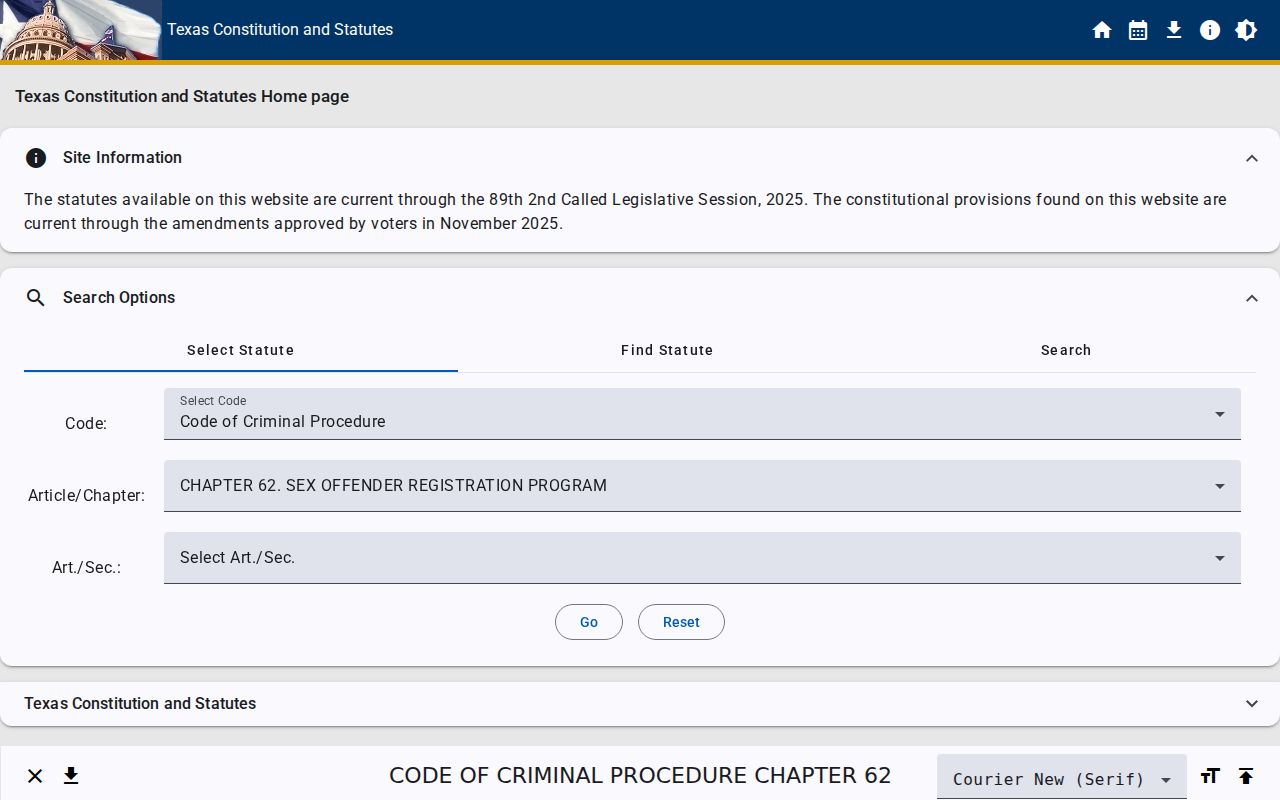
The statute shows why a Cass County profile should be read by offense, status, and governing article rather than by a generic tier label.
Cass County High-Risk Registry Notices
Community notification is not the same as every public registry listing. Under Article 62.056, DPS sends postcards for certain high-risk moves and sexually violent predator or civil-commitment cases. The notice process gives nearby residents a defined public-safety message. The broader registry remains available for ordinary name and place searches even when no postcard applies.
A postcard or high-risk label still does not declare that new misconduct has occurred. It reports a legal registration and notification status. Use the facts for practical safety planning, such as discussing boundaries with family members or confirming the correct address with authorities. Do not publish private household information that DPS withholds. For a suspected reporting failure, contact the relevant Cass County or city law enforcement authority instead of starting an online accusation.
Stale Cass County Registry Addresses
An old-looking address calls for verification, not confrontation. First, reopen the DPS profile and note its public status, listed address, aliases, and any verification information. Next, repeat the Cass County sex offender search by both name and geography. A map search can reveal a nearby result that a spelling-based query missed. Then check NSOPW if a move across the Arkansas or Louisiana border is possible.
Report a clear mismatch to the registering authority. City residents generally fall under city law enforcement, while rural residents generally register with the county authority. Give the agency the public facts and explain what seems inconsistent. Do not visit the address, contact household members, or attempt to test whether the person lives there. The authority can compare nonpublic registration data and decide whether an inquiry or enforcement step is warranted.
Community Notification and Lawful Use
Registry information exists for public awareness and personal or family safety. It can help residents learn what Texas DPS has published about a person or place. It should not be treated as a complete criminal history, a prediction of future conduct, or permission to take action against a listed person. A conviction and registration duty may remain visible long after the underlying court case, and duration is set by law.
Keep urgent safety issues separate from registry research. Call emergency services when there is an immediate threat. For a suspected failure to register or update an address, report the facts to the city or county registering authority. Do not approach the person. Cass County residents can use the Sheriff's published contact at 604 Highway 8 North in Linden or call 903-756-7511 for county routing. A city address may need that city's police department instead.
Use registry data lawfully. Using registry information to harass, threaten, trespass, intimidate, or commit another offense against a registrant or household is a crime under Texas law. Texas Code of Criminal Procedure Chapter 62 governs the registry; report concerns to law enforcement and do not confront anyone.
A careful Cass County registry check ends with source confirmation. DPS supplies the public statewide profile. The local registering authority can examine a compliance concern. Courts hold the underlying case record, and none of those sources turns a listing into a current-danger finding.