
Checking Criminal History in Cass County
Start by naming the record you need. The Cass County Clerk Web Access system searches local criminal case material after you accept its disclaimer. Current custody belongs in the sheriff-linked confinement search. A filed felony or County Court at Law case may require the District Clerk, while the Texas DPS product gives a narrower statewide view of public convictions and deferred adjudications. These channels are not duplicates. Each indexes a different stage, and a result from one may supply the cause number, date, or agency needed to search the next.
Gather the full name, spelling variants, a date range, and any known cause, booking, or incident number. A name match alone does not prove identity. Compare the court, offense wording, filing date, and disposition. When accuracy matters, obtain the source record and a certified judgment rather than relying on a search-screen summary.
- Choose a custody, court, agency, or statewide record based on the question.
- Search with the best unique number, or use a name and narrow date range.
- Record the court, agency, cause number, charge text, and status from each result.
- Ask the arresting agency for its report and the correct clerk for the filed case.
- Order a certified copy or fingerprint personal review when formal proof is needed.
Two Cass County Record Counters
“The courthouse” can mean the wrong stop in Cass County. County Clerk Amy L. Varnell works from the historic courthouse at 100 E. Houston Street in Linden. That office provides its web-access system, public terminals, and County Clerk criminal copies. The Law Enforcement & Justice Center at 604 Highway 8 North houses the sheriff and jail, District Clerk, Fifth Judicial District Court, and County Court at Law. Arrest and booking records begin there, as do many felony and misdemeanor court files.
The split matters in a rural county covering almost 937 square miles. County Clerk hours include a noon closure Monday through Thursday, while District Clerk hours also break at noon. Call before a long trip and state the record type, court, and date. The official Cass County overview shows the local offices and links the inmate search.
The county’s official image shows the public institutions behind Cass County record access.

That county source is the best starting point when an office link or local contact changes.
Texas Official Background Checks
The Texas Department of Public Safety Crime Records Division maintains the central criminal-history repository. Its public name search discloses conviction and deferred-adjudication information authorized by Government Code Chapter 411. It is not a complete fingerprint rap sheet. A public search requires an account and prepaid credits. One search uses one credit even when no match appears, and common names can create false matches.
A person reviewing their own identity-linked Texas record should follow DPS personal-review instructions and use FAST, the Texas Fingerprint Applicant Services channel operated by IdentoGO. A service code tied to the authorized purpose begins enrollment. Cass County has no verified permanent IdentoGO site in the research, so the live enrollment system should determine the current location. For a federal self-review, only the subject may request an FBI Identity History Summary.
The TxDPS Criminal History Search illustrates the account and credit-based state channel.
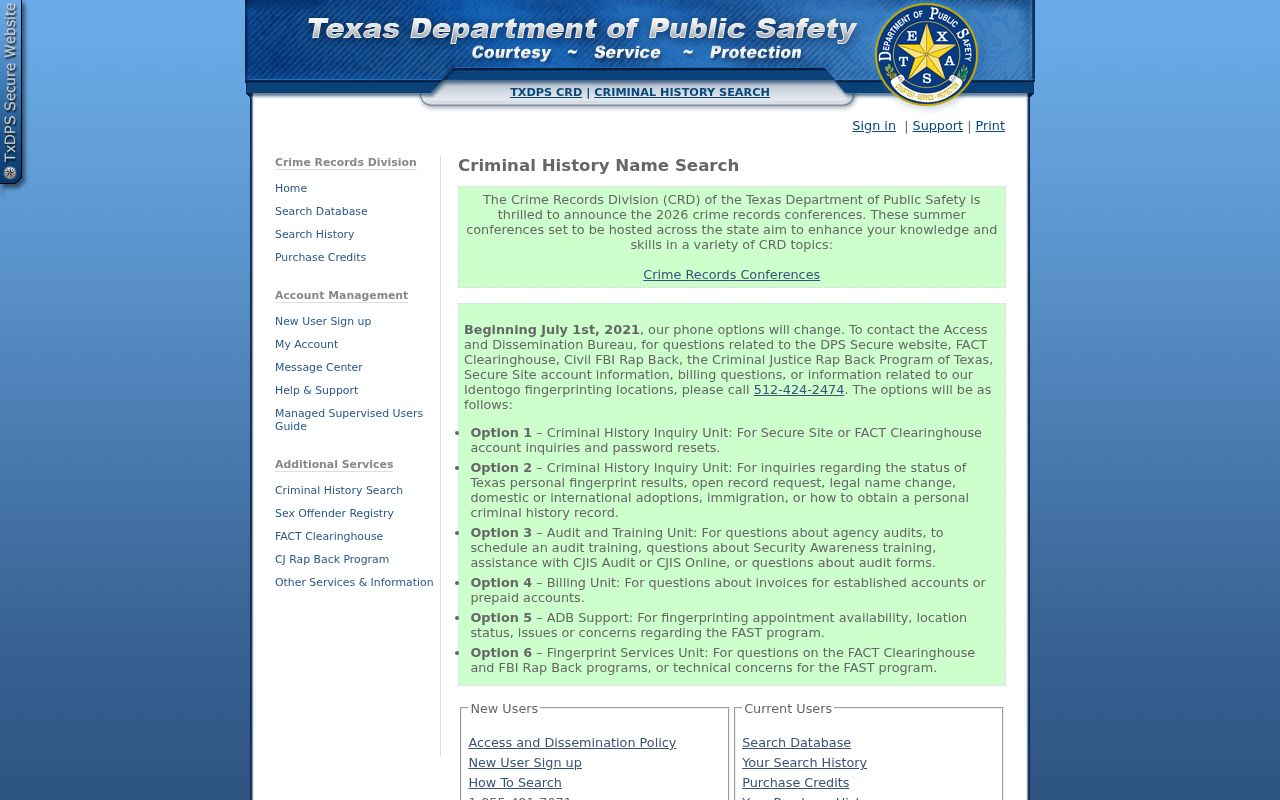
Use that result as a statewide public product, then compare it with the Cass County court disposition.
Cass County Clerk Search Controls
The Cass County Clerk portal begins with an accuracy disclaimer. Public users accept it, choose the criminal category, and search by a name or an available case or instrument identifier. Date shortcuts include today, yesterday, this week, last week, this month, and last month. The site can warn that document images are unavailable during backups. That warning means the image service is down, not that the case does not exist.
Required markings for every live field were not published, so the portal should not be described more precisely than its official controls allow. Try a cause number first when one is known. For a name search, compare the filing date and court. Then save the cause number before ordering a copy.
| Control | Use | Search note |
|---|---|---|
| Disclaimer | Accept to enter public access | No private subscriber login is needed |
| Record category | Select Criminal | Do not leave the search in OPR or probate |
| Name | Person or party path | Confirm common-name matches |
| Case identifier | Exact-number path | Best when taken from a docket or notice |
| Date range | Narrow the result set | Preset shortcuts cover recent periods |
Criminal Record Types
Cass County records follow the event that created them. A police officer or deputy writes the incident and arrest report. Jail staff create the booking and confinement entry. A prosecutor files a complaint or information, or a grand jury returns an indictment. Court clerks preserve dockets, motions, pleas, judgments, and sentences. DPS links fingerprint-supported arrest cycles to reported dispositions. TDCJ begins a separate custody trail after a person enters state prison.
Because each custodian holds only part of the history, search terms should match the record. A current confinement entry cannot prove guilt. A court docket schedule cannot show every filing. A DPS public result does not replace a person’s complete fingerprint review.
- Incident and arrest reports: request them from the agency whose officer created the report.
- Bookings: the Cass County jail records intake, initial charges, bond, and release or transfer.
- Court files: the right clerk holds the cause number, filed charge, events, and judgment.
- State history: DPS organizes reported arrest cycles and dispositions around identity.
- Custody and supervision: Cass jail, Bowie-Cass CSCD, and TDCJ cover different stages.
Cass County Jail Record Channels
The sheriff links to Southern Software Citizen Connect for current confinements and recent admissions. Users can choose current confinements, the last 24 hours, the last seven days, or a custom date range of no more than 31 days. Charge text and arresting-agency filters offer other paths. The agency list can include out-of-county departments, which proves that the arresting jurisdiction and place of custody are not always the same.
Human verification or rate limiting can block a search. When that happens, call the Cass County jail at 903-756-7511 rather than treating an empty screen as proof that no booking exists. Historical booking sheets require a targeted request to the sheriff. The arrest narrative remains with the arresting police department or other agency. Filed charges and the outcome belong to the clerk.
For an active Texas prison sentence, the TDCJ Online Inmate Search supplies the state-custody layer.
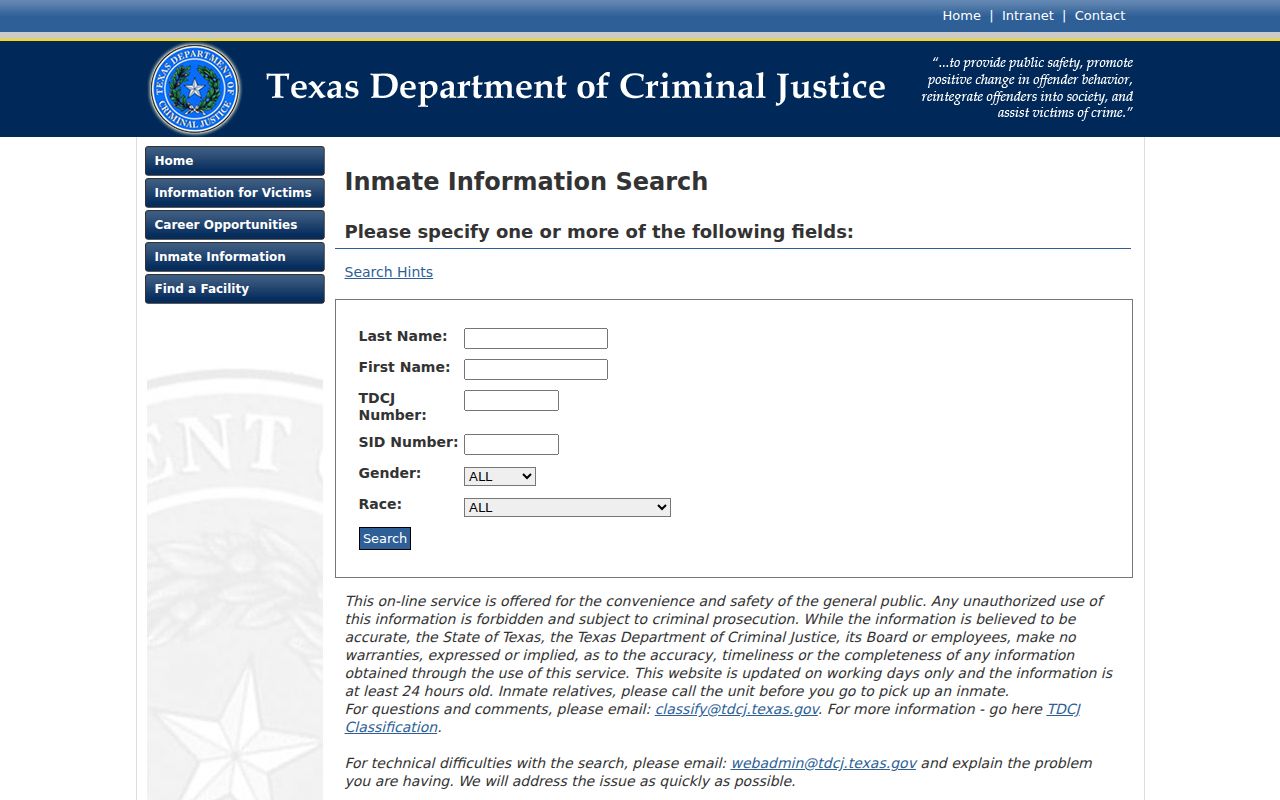
TDCJ is not a substitute for Cass County pretrial jail data or the final local judgment.
Inside a Cass County Criminal Record
A record’s fields reveal its source. DPS history centers on identity, aliases, a state identification number, arrest agency and date, charges, and linked dispositions. A clerk file centers on its cause number, court, filed documents, event dates, plea, judgment, and sentence. A jail entry centers on admission and release, agency, initial charge, bond, and custody status. Compare these fields instead of assuming that one product is more “complete” for every purpose.
Initial charge language may change after review by the Cass County Criminal District Attorney. A prosecutor may reject, amend, or replace a charge, and a grand jury may return an indictment or no-bill. The judgment controls the final court result. Record the exact disposition date and offense text before asking DPS to correct a state entry.
| Name & Identifiers | Displayed name, aliases, birth data, and system-specific ID numbers used to distinguish people. |
|---|---|
| Arrest / Booking Data | Arresting agency, date, booking number, intake charge, bond, and release or transfer. |
| Charges & Statutes | Initial arrest language and the later complaint, information, or indictment filed in court. |
| Disposition | Dismissal, acquittal, conviction, deferred adjudication, or another recorded outcome. |
| Sentence | Custody, community supervision, fine, restitution, and other terms ordered by the court. |
| Custody / Supervision Status | Local confinement, state imprisonment, parole, or community supervision, depending on the source. |
Cass County Warrant Search Limits
Cass County has no comprehensive public warrant index. Citizen Connect’s Most Wanted page is selective and had no active entries when researched. An empty publicity list does not clear a name. Call the sheriff and the issuing court. A Fifth District or County Court at Law warrant belongs with that court, while a justice or municipal capias may remain outside the felony docket.
Ask for the cause number, issuing court, charge, and current instructions. A warrant orders an arrest based on probable cause. A bench warrant or capias follows a court event or missed appearance. A capias pro fine is a fine-only post-judgment process. GovRec and similar payment pages do not prove that a warrant has been recalled. Obtain written confirmation and allow the court’s update to reach law enforcement before relying on a payment receipt.
Note: Never approach a person shown on a wanted list; send tips or warrant questions to the sheriff or issuing court.
Public Access Laws in Texas
The Texas Public Information Act gives access to nonexempt information and requires a prompt response, but it does not force an office to answer questions or create a new report. A focused request identifies the record, approximate date, agency, incident or booking number, and desired format. The well-known ten-business-day rule usually concerns an agency’s request for an Attorney General decision to withhold information. It is not a delivery promise.
Criminal-history dissemination follows a separate rule. DPS may publish authorized conviction and deferred-adjudication information, while the broader repository record remains restricted unless Chapter 411 permits release. Judicial administrative records follow Rule 12, but the documents filed in a criminal case come from the court clerk.
Key Statutes:
Government Code Chapter 552 gives access to nonexempt public information and sets request procedures.
Government Code Chapter 411 controls DPS criminal-history release and orders of nondisclosure.
Code of Criminal Procedure Chapter 55A sets Texas expunction paths and effects.
Code of Criminal Procedure Chapter 62 governs sex-offender registration and public fields.
Cass County Court Record Paths
The Fifth Judicial District Court hears Cass County felony matters. The County Court at Law handles Class A and B misdemeanors and other matters within its statutory authority. Fine-only cases remain with the justice or municipal court that issued them. The District Clerk lists separate staff for District Criminal and County Court at Law Criminal files, and the county posts dated docket PDFs for both courts.
A docket PDF is a schedule, not a name-based history. For an omitted or older file, call the District Clerk at 903-756-7514 and ask for the right criminal division. Statewide re:SearchTX can add an index and document-access path from participating Texas courts, but coverage and document permissions vary. The local clerk remains the source for a certified Cass County judgment.
The statewide court interface shows why a broad index needs a local file check.
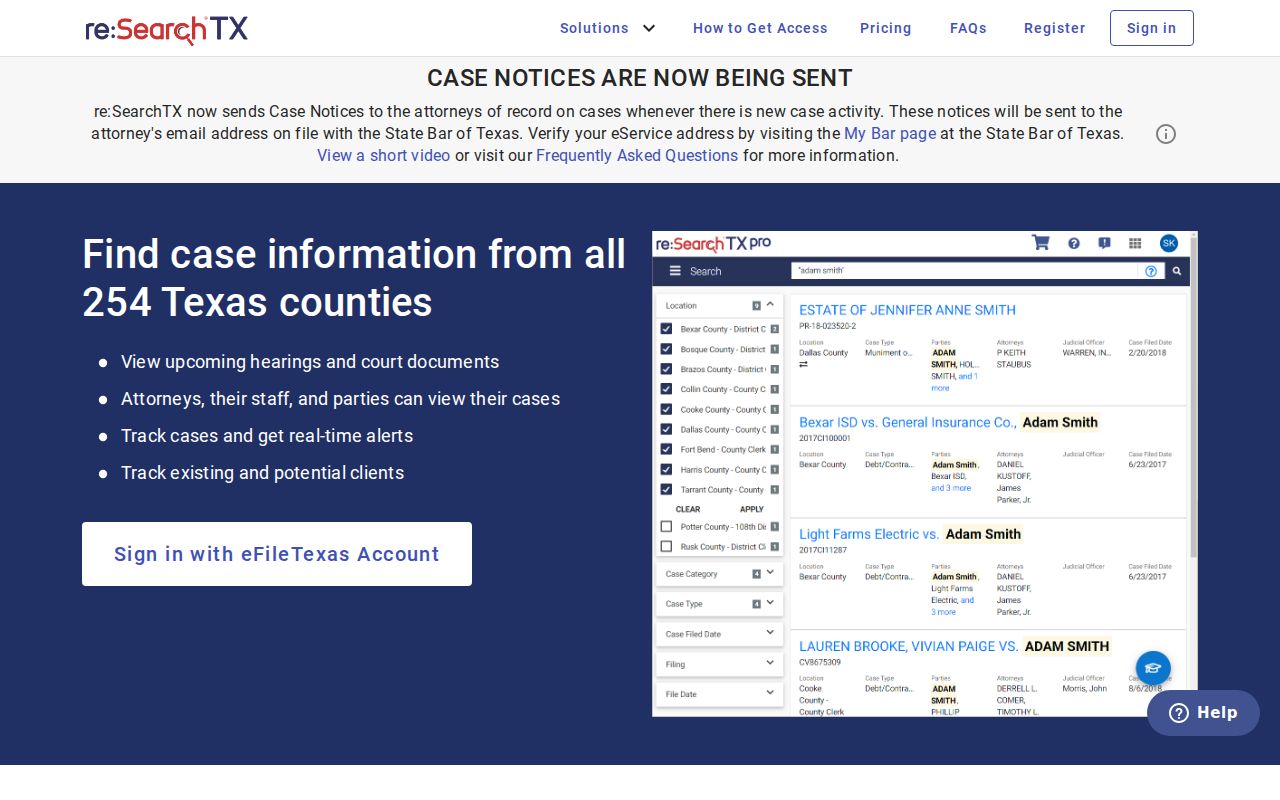
Use the court and cause number from any statewide hit to route the copy request correctly.
Sealed, Expunged, and Restricted Records
Texas uses two distinct remedies. Expunction under Code of Criminal Procedure Chapter 55A can remove or destroy qualifying records, but it is narrow and does not serve as a general way to hide convictions. Potential paths include an acquittal, pardon, mistaken identity, and some arrests that did not end in a final conviction or pending charge. Exact timing and same-episode rules matter. Research benchmarks for no filed charging instrument include 180 days for a Class C arrest, one year for Class A or B, and three years for a felony, subject to statutory exceptions.
An order of nondisclosure restricts public release but allows criminal-justice and named agencies to retain access. Eligibility depends on the offense, disposition, and specific Government Code section. File with the court designated by Chapter 55A or the applicable nondisclosure law. Cass County links to state model forms, but no Cass-specific expunction filing fee was verified. Confirm current cost and procedure with the District Clerk.
After an order, recheck the Cass portal and review your fingerprint-linked DPS record. If the state record remains wrong, DPS lists 512-424-7256 for inaccurate-data help and may need a certified disposition or order.
Cass County Criminal Record Fees
County Clerk Web Access allows online search, card payment, and printing. The official fee schedule prices plain criminal copies at $1 per page and adds $5 per document for certification. The counter will not take copy orders by phone or fax copies. Mailing requires payment first. Payment rules vary between online and counter service, so call before traveling when card use matters.
DPS uses a different fee model. A public name search costs one $1 credit, plus a 2.25 percent per-credit charge and a 25-cent card transaction charge. The mailed CR-42 option costs $10 per search. The fingerprint path has program-specific costs, while the researched DPS base components totaled $37. The FBI Identity History Summary fee was $18, apart from any fingerprint or channeler cost.
| Record service | Researched cost |
|---|---|
| Cass County Clerk plain criminal copy | $1 per page |
| Cass County Clerk certification | $5 per document, plus page cost |
| DPS online name search | $1 credit plus stated processing charges |
| DPS CR-42 mail search | $10 per search |
| FBI subject-only history summary | $18 plus fingerprint or channeler costs |
The IdentoGO enrollment portal is the official place to use an authorized FAST service code.
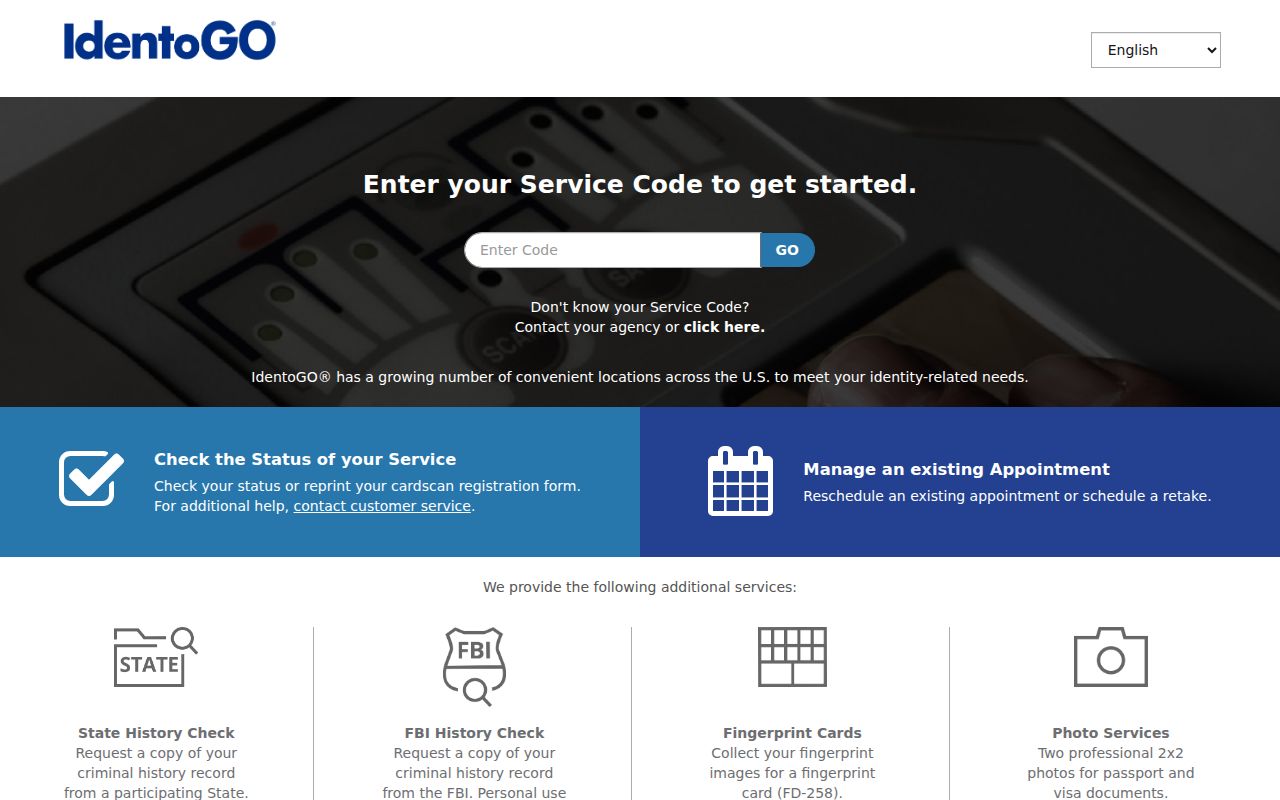
Do not assume a fixed Cass County fingerprint site until the live service-code search supplies one.
Cass County Criminal Records by City
Atlanta, Linden, and Hughes Springs each keep their own police reports and municipal court records. The city that created an incident remains the first custodian even when the Cass County jail later holds the person. A municipal citation also stays with its issuing court. County booking records, Class A and B misdemeanors, and felony files move to the county channels in Linden, while DPS provides the authorized statewide conviction view.
Atlanta Criminal Records
5,433 residents · APD reports and Atlanta Municipal Court citations begin at city offices.
Linden Criminal Records
1,825 residents · City police, municipal court, and county offices use different Linden counters.
Hughes Springs Criminal Records
1,575 residents · Police and court contacts share the municipal building area but keep distinct records.
Cass County Criminal Record History
The Cass County courthouse is Texas’s only continuously functioning antebellum courthouse. Construction began around 1859 to 1861 and ended in 1866. Later additions, a fire, and preservation work changed the building, and it was rededicated in 2012. Today that historic setting still holds County Clerk terminals, while the sheriff, criminal courts, prosecutor, and District Clerk operate from the newer Justice Center.
The old and new buildings mirror the record chain. An Atlanta, Linden, Hughes Springs, Queen City, sheriff, constable, DPS, or Parks and Wildlife officer may start an arrest file. Jail staff record confinement. Prosecutors choose filed charges. Clerks add the disposition, and DPS can match it to the fingerprint event. Gaps can arise when identifiers differ or a disposition has not linked yet.
- Arrest cycle
- One arrest and the charges and dispositions linked to that event.
- Disposition
- The recorded outcome, such as dismissal, acquittal, conviction, or deferred adjudication.
- Capias
- A court writ ordering arrest after a proceeding or missed duty.
- Community supervision
- The Texas term commonly called probation.
- Nondisclosure
- A limit on public release that still permits access by authorized agencies.
Registry records form another distinct layer. The Texas Public Sex Offender Registry supports name and geographic searches.
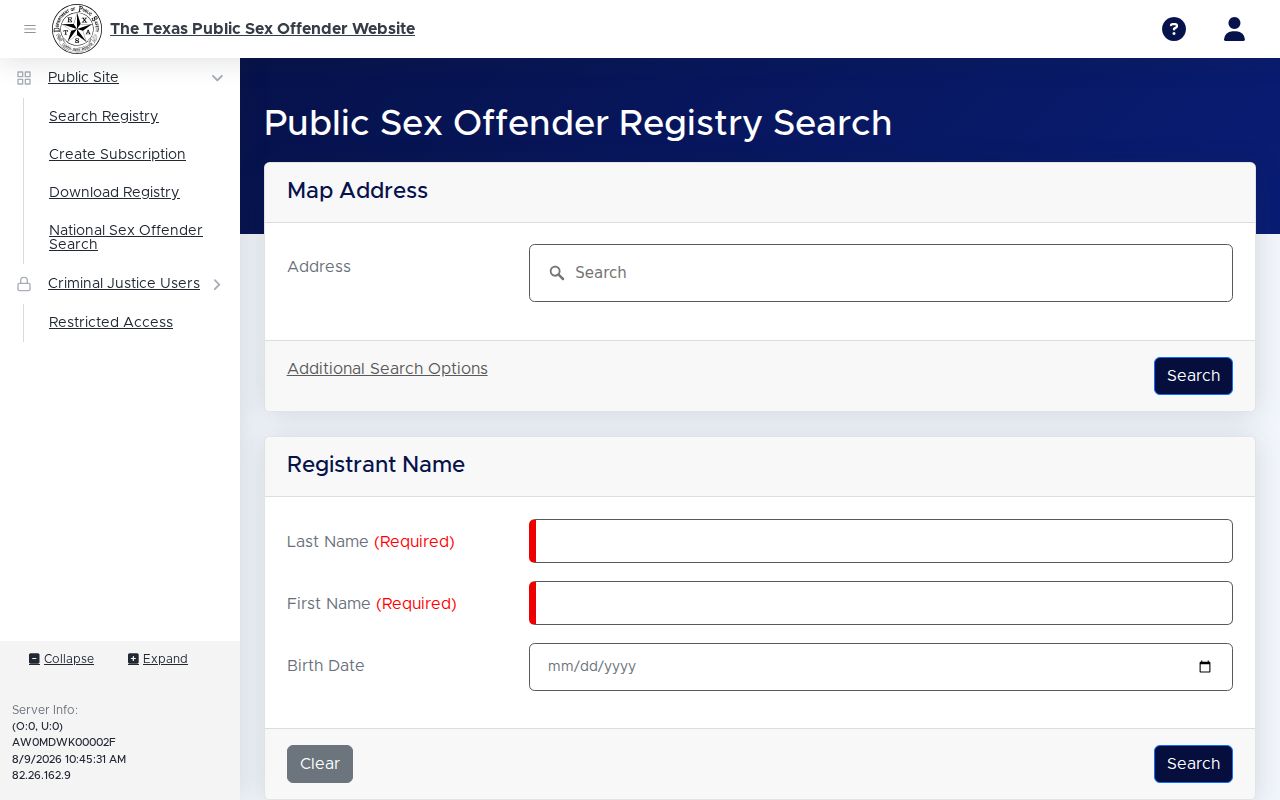
Registry status is not a current-danger finding, and the information must never be used to harass or threaten anyone.